Importance of vapor barrier
The vapor barrier is an essential part of the insulation in every house because it prevents moisture from entering the buildings. Large amounts of moisture originating directly from atmospheric precipitation or air humidity enter buildings through weak points on the facade. These can be improperly sealed joints around openings, between facade elements, or overall porosity of the facade plane. Once it enters the building, moisture remains trapped there and can damage the building and endanger the health of the user. That is why facade walls must be constructed in such a way as to prevent excessive penetration of external moisture. Moisture can penetrate the building through the air or through the facade itself. Moisture build-up causes problems over time. That is why vapor barriers are used in our construction industry, but apart from them there are also air barriers that serve to stop air currents. The vapor barrier can be an air barrier at the same time, but it is necessary to ensure all connections very carefully in order to successfully perform its function.
What should be considered when installing a vapor barrier?
At the ends and overlaps, make sure that the foil protrudes by about 10 cm so that the condensed water can drain outside the room and away from the insulation material. It is also important to ensure that the foil seals tightly – open areas can result in moisture ingress into the object. The foil must therefore be stapled every 7 to 10 cm, and then hermetically sealed with adhesive tape or adhesive paste. It is important to ensure that the vapor barrier has no openings that could let air in.
Why install a vapor barrier?
The vapor barrier protects the insulation material underneath from moisture caused by drying clothes, cooking or other evaporation. If this steam penetrates the walls, it condenses there. This can lead to damp spots or even mold. However, not every insulation material needs a vapor barrier. Calcium silicate boards usually survive without a vapor barrier. When buying your insulation material, consult with an expert which is best and whether it needs a vapor barrier and which material is suitable.
What preparations should be made before installing the vapor barrier?
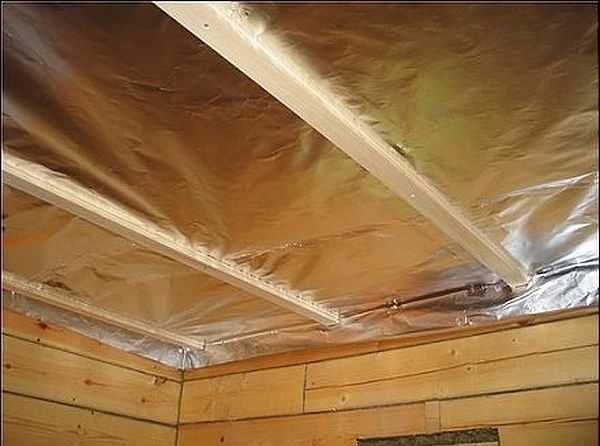 Vapor barrier When choosing insulation, it is important to ensure the right combination of insulation material, vapor barrier or air barrier and ceiling covering. In any case, seek advice from a master. Before installing the vapor barrier, of course, insulation must be applied. You should measure the areas to be covered with a vapor barrier and cut the foil according to those measurements if necessary.
What materials are used for vapor barriers?
Vapor barriers and air barriers are available in different materials. The most common are films made of polyethylene or polyamide. But there are also environmentally friendly variants such as vapor barrier cardboard. Even aluminum is used as a vapor barrier. Different types of moisture require different systems to stop it. It is much easier to stop water in the form of droplets than it is in the form of vapor carried by the air.
Is mineral wool enough without a vapor barrier?
The need for foil for attic insulation implies that it is also needed for attic insulation. There are a good number of houses that have wood paneling, suspended ceilings, internal insulation and above all that board or caratavan. It is impossible to look at it as a pothole that is just now being done and must be 100% sealed with tapes and some silicone. That”s why in some houses, mineral wool does the job even without any foils. This should be considered together with experts in the field and according to the requirements of your facility.
Where is the vapor barrier installed?
In order to prevent the occurrence of condensation, the vapor barrier is placed on the warm side of the wall. In this way, it prevents the occurrence of condensation on the opposite side, that is, it prevents water vapor from coming into contact with cold air. In moderate climates like ours and where there are a lot of cold days, the vapor barrier is placed towards the inside of the room, towards the warmer side. However, it should be kept in mind that in areas where there is high heat and humidity for most of the year, where the interior is kept constantly cool thanks to the air-conditioned space, the vapor barrier is placed on the outside of the wall. The vapor barrier is therefore one layer, a foil in the wall or roof construction placed on the warmer side, and the climatic conditions determine which side of the wall it is. In our climate, it is placed over thermal insulation towards the interior.