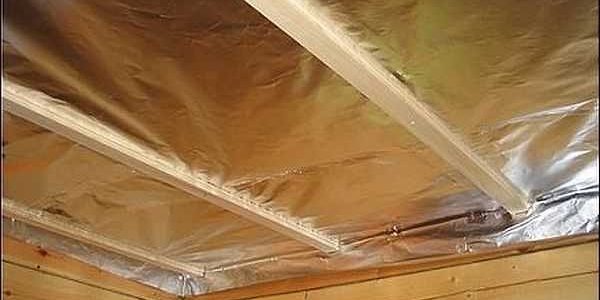
What is the advantage of leaving the floor insulation to a professional?
Making floor insulation does not seem particularly difficult at first glance, but if you do not act correctly, e.g. thermal bridges are created that let moisture and cold into the walls. Therefore, it is preferable to leave the construction of floor insulation to professionals.
Installation of floor insulation
The floor insulation is placed between the concrete slab and the leveling layer, and in the basic version it consists of a waterproofing layer of bitulite which is used to coat the slab, and a thermal insulation layer consisting of panels of extruded polystyrene – styrodura over which nylon, i.e. transparent building foil, is placed. As with facade insulation, one of the key things is the thickness of the insulation layer, and according to the rulebook on the energy efficiency of buildings for mezzanine construction, it should be a minimum of 3 cm (although for the full effect it is always preferable to have it more), and for the floor on the ground floor at least
What materials are used for floor insulation?
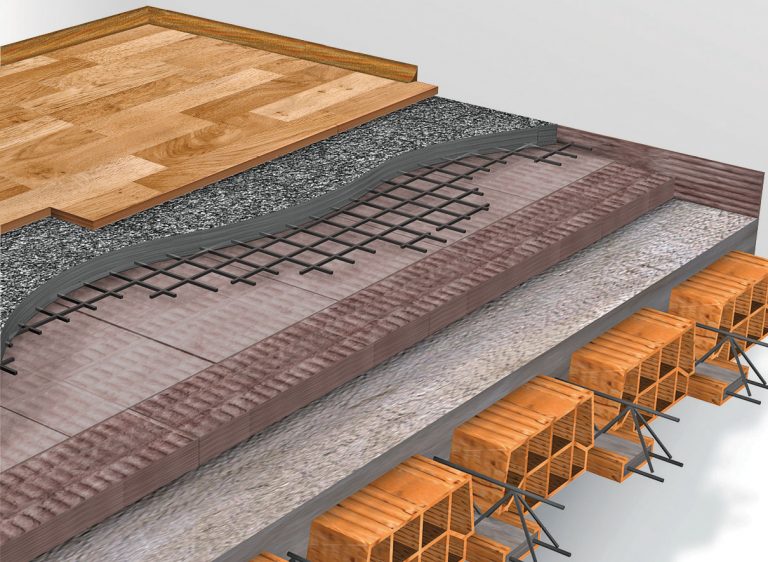 Floor insulation
The choice of material for floor insulation most often falls on Styrofoam, which, as a rule, is placed between the concrete slab and the leveling layer. If underfloor heating is installed in the building, then the pipes lie on the insulation panels fixed with a network of grooves, and the screed goes over them. The thickness of the floor insulation should be as large as possible. In the early days of the appearance of floor insulation, customers mostly opted for 3cm Styrofoam because it was suggested to them that it was enough, but if you want the floor insulation in your home to make any sense, it should not be so thin. Many years of work experience and relevant data obtained from various tests and measurements have led to the development of innovative floor insulation systems, where the cold from the ground is not allowed to pass through the foundation.
What should you pay attention to when installing floor insulation?
When installing the floor insulation, make sure that they connect to each other without any gaps. The creation of thermal bridges, through which cold and moisture penetrate the wall or floor, must be avoided at all costs! Thermal bridges can lead to dampness and mold or serious damage to walls. Therefore, it is important to lay the insulation slightly over the edge of the floor slab so that the insulation of the outer wall can be placed directly on top of the floor slab insulation.
What types of insulation are suitable for floors?
There are usually two ways to create floor insulation: from below or above. Although under-floor insulation is still being used more and more often, internal insulation on the floor slab is easier to do and you can choose from a wider range of insulation materials. However, thermal bridges form at the corners and edges of the insulation. To minimize this, the foundation should have external insulation to the bottom edge.
Sound insulation of the floor
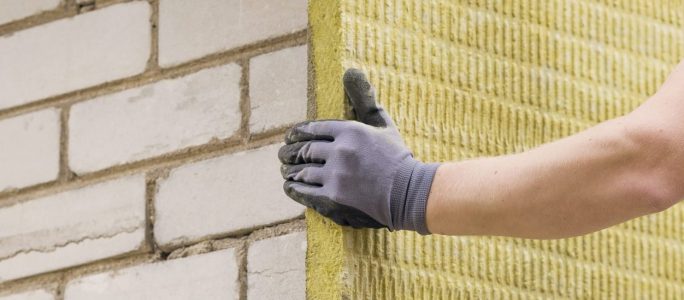
Sound insulation of the floor is achieved with stone wool thanks to the specific arrangement of the fibers, and the air between the fibers ensures high-quality thermal insulation. You hear the term mineral wool very often, but you should know that it is also used when it comes to stone and glass wool. for rock wool, a little coke is added to the mixture of diabase and basalt minerals most often. Depending on how it is stacked, the weight for the same thickness can vary significantly, so the final values can be from 30 kg to 200 kg for one square meter.