
Building chimneys for central heating
Regardless of whether it is construction or assembly, it is important to comply with the rules and standards that are provided for when it comes to the chimney for central heating. If ready-made elements for the chimney are used, it is important to take all of them from the same manufacturer and to complete them. For this, the common name shidel chimney is often used, although there are several different manufacturers. Above the foundation comes the condensation pan, which is important when using newer boilers for central heating, as they generate more condensation in the chimney. Above that, the door for chimney cleaning is mounted, which also needs to be mounted in the attic or attic. In this way, chimney cleaning can be done easily without having to go out on the roof and climb to the top of the chimney. The joining of flue pipes (round elements) and mantles is strengthened by a combination of fireclay flour, glass water, cement and sand, but there are several different ratios as to which material is used, depending on the manufacturer of the element. Certain manufacturers sell a special ready-made mixture or adhesives (silicone) for joining the elements of the chimney they produce, in order to avoid errors that may occur in case of incorrect dosing of the elements for the binding mass.
Chimney for central heating – leave the construction to the experts?
The construction of chimneys for central heating must be left to experts. In order for the chimney to be installed in the house, special knowledge is needed that ordinary people do not have. And the damage that can be caused by an incorrectly installed chimney is enormous. In addition to the risk of smoke poisoning or fire, it may happen that the insurance does not apply in the event of a fire and the resulting costs must be paid out of pocket. These are the main reasons why the construction of chimneys for central heating should be carried out by a professional. We recommend that you post the required service on Bellcom.rs and you will receive offers from local verified companies.
More burners on the chimney for central heating?
We can connect several burners to the chimney for central heating, but those burners must use the same type of fuel and must work on the same principle. For example, we can connect up to 3 atmospheric gas stoves to one vertical chimney, with individual power up to max. 30 kW (ie, a total of max. 90 kW). At the same time, the distance between the lowest and the highest connection can be max. 6.5 meters. Also, we can connect up to 3 solid fuel stoves of individual power up to max. to one vertical chimney. 20 kW (total max. 60 kW). The distance between the lowest and highest connection can be max. 6.5 meters. There is an exception to this rule that refers to gas burners that are connected to a SCHIEDEL QUADRO chimney specially designed for them, which allows up to 10 vertical connections.
Protective cover on the chimney for central heating
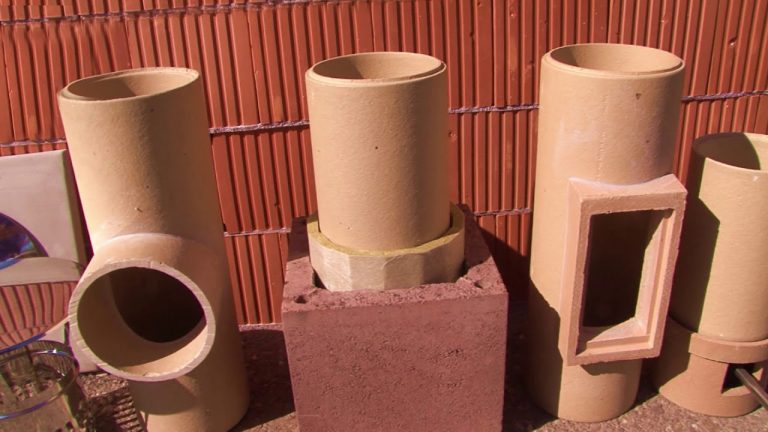 Chimney for central heating The cover, i.e. the rain cap, in principle, obstructs the normal flow of flue gases. However, their installation is recommended on all chimneys that are occasionally used (chimneys for indoor fireplaces) or serve as backup – safety chimneys (primarily in multi-story buildings). Caps are mandatory on all chimneys with metal or plastic pipes that are not connected to the drainage system. If the chimney for central heating is connected to the drainage system, the cap on the top of the chimney is not required. In any case, modern fireplaces cause the appearance of condensate in the chimney itself in a much larger amount than the moisture that occurs due to atmospheric precipitation. In short, this means that the protective cap cannot solve the problem of condensation in the chimney if it is not resistant to it. This is a common misconception that the problem of condensate in the chimney can be solved by installing a cap. Only a modern chimney whose pipes are made of materials such as technical ceramics, completely insulated and with an
Chimney height for central heating
The chimney for central heating must be properly installed above the roof and insulated. For normal operation of the boiler, it is necessary that the chimney has the prescribed characteristics: diameter and height, good insulation and sealing (best of fireclay pipes with insulation) or similar. The boiler achieves its rated power only if the chimney draft is adequate.
Chimney maintenance for central heating
The chimney should be cleaned twice a year. Chimney burning is necessary when certain amounts of resin remain on the walls of the chimney after mechanical cleaning. This process must be constantly monitored and can be very risky if it is not carried out by a professional chimney sweep. Chimney sealing is applied when there is a physical barrier in the chimney that must be removed. Pieces of construction or natural material (leaves and branches blown by the wind) or nests of smaller animals (bees, hornets, birds) can be found in the chimney. Chimney choking sometimes requires serious intervention by a chimney sweep.


