Air conditioning installation – do it yourself?
Installation of air conditioning is usually the biggest problem. Improper installation usually results in the loss of the warranty, and the majority of failures are due to poor installation. We will explain the basic installation procedures, but this does not mean that non-experts are advised to install the device step by step. Good installation requires expertise, specialized tools and devices that cannot be replaced with classic household ones. Although the price is a little higher at the start, it will soon pay off in exploitation.
Air conditioning installation – outdoor unit
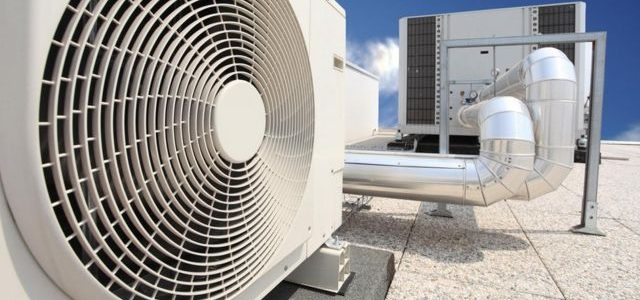
 Installation of air conditioning The installation of air conditioning involves the installation of an outdoor and an indoor unit. The outdoor unit can be in a higher position than the indoor unit, but in that case the condensate hose must not Oil traps (siphons) must be made when there is a difference in height above 2m. The next step is to fix the support of the outdoor unit to the wall (equalize the distance of the support with the legs on the outdoor unit). The opening in the wall as well as the necessary dimensions of the screws depend on the type of wall. Depending on which model of device is installed, for noisier devices, rubber washers are placed between the legs of the air conditioner and the support to reduce vibrations and noise. The next step is to connect the cable to the outdoor unit and connect the pipe to the outdoor unit.
Installation of air conditioning – indoor unit
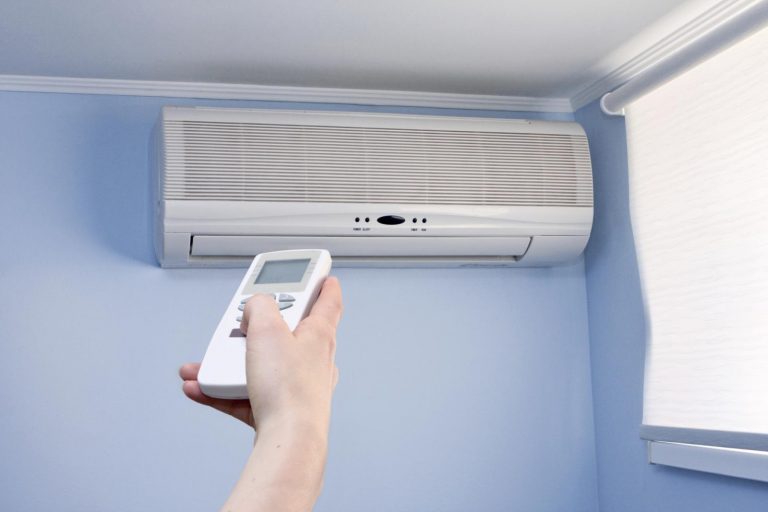
When installing the air conditioner, the indoor unit, first of all it is necessary to lean the support against the wall and mark the places for the holes in the wall (pay attention to the intended wall spacing), drill the holes and screw the support. Most often, the support is fixed with 4-6 screws (dimensions depend on the base to which it is attached). Be sure to take care of the ideal horizontal position (use a water leveler). After these works, it is necessary to break through the wall to connect the indoor and outdoor units. It is necessary that the opening has a slight slope to the outside. Due to condensate drainage, it is necessary that the indoor unit be higher than the outdoor unit and that the opening in the wall be lower than the indoor unit. If it is necessary to continue the pipes through which freon passes, it is most practical that it should be under the indoor unit and that the connection does not pass through an opening in the wall. In the event of a breakdown, it enables easier repair. And finally – connecting the installation to the indoor unit. The insulation of the two pipes through which freon passes (copper pipes) is done separately. A condensate hose should be added to the insulated pipes. Connecting the power cable and communicating with the outdoor unit. Most often, in the right part of the indoor unit, there is a cover under which there are cable connectors. After connecting the cables, it”s time to connect the pipes. The pipes are cut to the exact size with a copper pipe cutting tool. Next, the pipes are prepared for connection to the indoor unit by spreading the ends with a lacing tool and then securing them to the indoor unit with hollanders
The main difference between air conditioners is their capacity. Determining the capacity of the air conditioner is influenced by many factors, such as: the area of u200bu200bthe room, the position of the room, the glass surfaces, the arrangement of doors and windows, the existing insulation of the building, the position of the air conditioner and the number of people in the room. For home use, simplified calculations are used that focus on the square footage and height of the room.
Different air conditioning systems
We distinguish between central and split air conditioning systems, as well as mobile devices. Central air conditioning is usually only worth it for new buildings. With this system, cold air reaches the premises from the central unit through the distribution system, which with almost anything that is not a new building would lead to a disproportionately high expenditure and corresponding costs. In addition, you can cool individual rooms in a more targeted and efficient way if you have a permanently installed but decentralized air conditioning system. These devices are available as a monobloc or as a split air conditioning system. As the name suggests, monoblocks combine cooling and distribution in the same device. They are often used in the industrial sector or in supermarkets. In the case of a split unit, on the other hand, the refrigeration compressor is located outside and the distributor is located inside. Both parts are connected by a hose that passes through a narrow opening in the wall. Wall, ceiling, cassette or channel units can be used indoors. Most residential customers decide to install a wall-mounted split air conditioner.