Why should I hire a fireplace fitting expert?
A fireplace can be very valuable in any home. It”s great when you can spend a cold winter evening in front of the fireplace with your family. Despite the many advantages of fireplaces, there are important factors that you must consider when connecting a fireplace. Flue gas drainage to the chimney is important, as is the supply of air for combustion. If you are a layman in this field, you should seek advice from a real master. He will give you advice on how best to establish a relationship without any problems afterwards.
What should you pay attention to when connecting a fireplace?
The connection of the fireplace implies first of all the exhaust of the smoke outside the room. Of course, it would be best to connect the fireplace chimney to the existing chimney so that all the smoke can escape through it. This is not possible with all houses, so in that case you have to lead the fireplace through the outer wall. To do this, you need to make a hole in your wall and run a pipe through it so that the smoke can escape outside. However, it is very important to install the pipe in the wall with fireproof mortar. You may need to isolate this point. Then it is recommended to take mineral wool. As most insulation systems are not fireproof, you should also seek professional advice here.
What are the benefits of a fireplace?
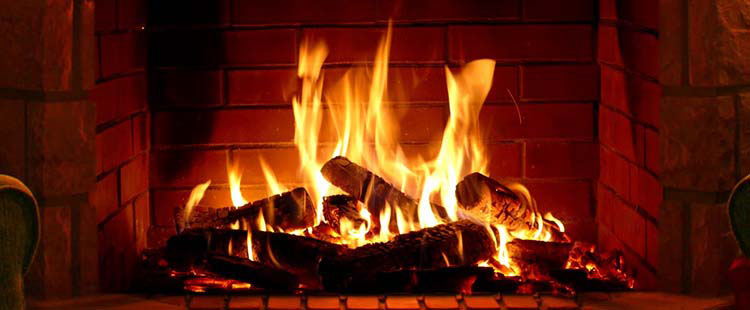 Connecting the fireplace On the one hand, the fireplace creates a great atmosphere in your living room. On the other hand, such a stove heats up relatively cheaply. Depending on the type and material of heating (wood pellets, etc.), the price can vary greatly. Today, there is an extremely large selection of different wood stoves. Regardless of whether the designs are modern, old-fashioned or abstract – there are almost no limits to your wishes. For example, you can choose a fireplace that fits perfectly with the rest of the furniture in the living room.
What are open fireplaces?
Open fireplaces are most often made by masonry from fireclay bricks and thermal concrete and joining prefabricated elements. Their basic characteristic is that at least one side is open, that is, the view of the fire is direct, immediate. The radiant heat spreads directly into the room, which gives an exceptional atmosphere that cannot be compared with any other type of fireplace. You can hear the nice crackling of the fire which is also part of the feeling of a real fire in the house. The construction of the hearth of such fireplaces must be such that it satisfies two basic requirements. The first is to achieve maximum radiation into the space, because this type of fireplace heats almost exclusively by radiation. This is achieved by making slanted side panels, as well as by beveling the upper part of the rear panel. Another, even more important requirement is that everything be done to prevent smoke from entering the premises. In order to achieve this, a lot of knowledge and experience is needed, but what future fireplace owners should know is the following: The size of the chimney cross-section, the height of the chimney, the relation of the chimney to the roof and surrounding objects, as well as the shape of the end of the chimney are of crucial importance for the operation of the fireplace.
What are indoor fireplaces?
The main feature of these fireplaces is that they have the option of closing the firebox with a gas door or a door with glass. This makes it possible to control and regulate the air supply to the combustion chamber, then control and regulate the flow and exit of hot gases from the combustion chamber to the chimney. In this way, it is possible to achieve significantly higher energy utilization. With some manufacturers, it is as much as 75%, which is almost the maximum achievable for fireplaces. Closed fireplaces are made of different materials. They can be brick fireplaces with built-in doors, usually with glass. It is actually an open fireplace with a built-in door. The next type are the so-called “cassette built-in fireplaces”, whose fireplace is most often made of boiler sheet metal, the door frame is made of foam in which the glass is installed. The main feature of these fireplaces is that they have a flat upper part of the fireplace and that they can be replaced relatively easily without demolition. Most often, however, fireplaces made entirely of black cast iron are installed.
Connect the fireplace to the appropriate chimney
The chimney must be of suitable cross-section and height. The internal surface of the chimney should be smooth so that soot and soot do not stick to the walls of the chimney as little as possible. As a rule, the chimney should come out above the roof at a height of 65 cm above the ridge. With each meter of distance from the ridge, it is allowed to reduce the height of the chimney by 10, maximum 15 cm. It is wrong to make drips on the upper part of the chimney, which will hinder the good operation of the chimney. Raindrops cause air turbulence at the top of the chimney. It is wrong to build “houses” on top of the chimney which also obstruct the normal flow of air. Concrete elements that are no wider than the outer sides of the chimney and that enable the normal flow of gases from the chimney channel can serve as chimney caps.