When should radiators be irradiated?
When it gets cold outside, it”s the radiators” turn. Unpleasant and sometimes loud gurgling sounds are often heard during the first start-up. They are caused by air in the radiators. The most important indicator of this is that the heating is not strong, i.e. the radiators are completely or partially cold. Then it is necessary to irradiate the radiators.
How to irradiate radiators?
If you want to irradiate the radiators, here is the procedure: – Place a cloth under the radiator to catch the water leaking from the valve or wrap the cloth directly around the valve. – Place the key and hold the container under the valve. Unscrew the valve slowly with the wrench, but not all the way. Most of the time, it only takes half a turn or less and it starts hissing. The air coming out can be hot, so keep enough distance. – When the hissing decreases and finally stops, water starts to leak. Now the vazuh has been drained from the radiator and you can screw the valve back on. If you have turned off the circulation pump, do not forget to turn it on again and check whether the water pressure in the heating circuit is sufficient. It may happen that the bleeding procedure has to be repeated several times.
Why is it necessary to irradiate radiators?
It often happens that radiators do not heat properly after the summer and are partially warm and cold near the top. This happens because air is trapped in the radiators, which does not allow hot water to rise and heat the entire surface of the radiator. That is why it is very important to irradiate the radiators in order to use their maximum heating potential. The radiation will expel all the air from the radiator system and thus provide you with better heating.
What should you pay attention to when you want to irradiate radiators?
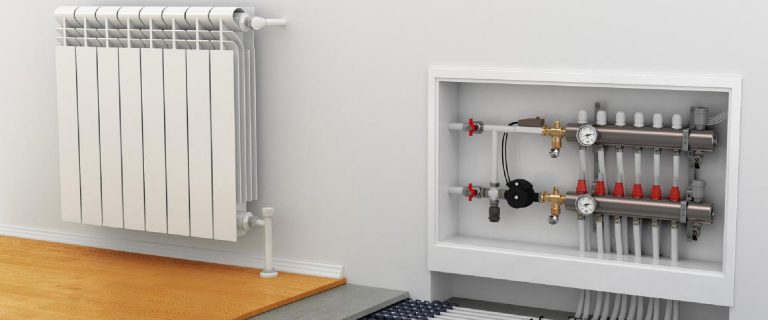 Irradiate the radiators In order for the air to be vented properly, the central heating system must be switched off. Prepare an old absorbent cotton cloth. Pay attention, there is a small hole on the side of the valve. Its position varies depending on how the valve is screwed into the radiator during installation. Sometimes it can be directed to the floor, sometimes to the ceiling, and sometimes to the wall. Put a cloth over that hole, because the air trapped in the radiator needs to come out through it, and finally some water, which is not the cleanest, so it can leave stains on the wall. If the jet is going to come out towards the floor, you can use a container instead of a cloth, but a cloth is a better solution, because it prevents water from splashing. Open the valve slightly and listen. First there will be a hissing sound as the air escapes. Towards the end, a mixture of water and air will come out of the radiator, and eventually a thin stream of water will appear. Then close the valve, because there is no more air in the radiator. If you live in a two-level house, the air will usually only occur on the upper level. If there is air in the radiators on the ground floor, first irradiate the radiators on the upper level.
Checking the correctness of the heating system
The first thing to do is to check if there is a bigger, more serious problem with the system. This means that you should check that all radiators are heating. You should also check if anything unusual is happening in the central heating system. Is the device that heats the water noisy, or does it not work in the same way as before. If more than one radiator is not heating, or the water heating device, for example a gas boiler, is behaving differently than usual, it is possible that there is a bigger problem, in which case a professional should be called to solve the problem.