
Why hire a master for dismantling radiators?
Old radiators often no longer provide the desired performance due to structural causes and deposits of scale and dirt. Even if you want to paint them and give them a new shine, sometimes it is still necessary to dismantle the radiators and install new ones for safety and functional reasons. This is usually a simple task and is quick and easy for an experienced handyman, but as the radiator is filled with water at a pressure of around 3 bar, it is advisable to hire a plumber.
What is important when dismantling a radiator?
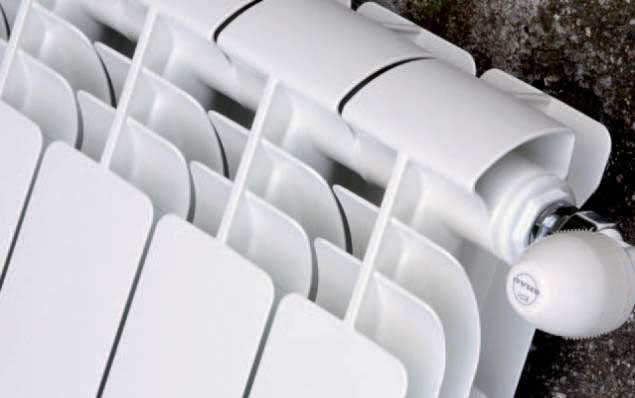 Dismantling the radiator Every radiator has an inlet and outlet pipe, a thermostatic valve used to regulate the temperature is usually located on the inlet pipe. But there are also radiators where the thermostat is integrated, and both pipes are directly connected to the radiator from below. First of all, it is important to check that the thermostat is on flow and that your radiator has a non-return valve. If the thermostat is integrated on the radiator, ideally there should be a valve on both pipes. These valves can be closed with a screwdriver or Allen key before depressurizing the radiator and disconnecting the pipes. Otherwise, when dismantling the radiator, the entire heating system must be turned off and disconnected from the power supply, the flow to the boiler must be closed and the entire heating circuit drained using the drain valve on the return of the system.
What are the advantages of dismantling the radiator yourself?
If the old radiator no longer works at full capacity or needs to be renewed, but also for safety reasons, such as the risk of injury to children, it may be necessary to dismantle the radiator. If you have little experience with this technology and want to save time until the plumber is available, you can also dismantle the radiator yourself. You will also save money, but make sure to connect everything properly, so that water does not leak from the installation later.
What preparations should I make when dismantling the radiator?
In the case of radiators with flow and return valves, both valves must be closed when disassembling the radiator. If the thermostat is on flow, it acts as a valve. If the radiator does not have a non-return valve, the heating circuit must first be drained. If the valves are closed or the heating circuit is emptied, the remaining pressure is released into the collecting vessel via the ventilation valve in the upper corner of the radiator. Then first loosen the flow pipe and then the return pipe. It is preferable to use a bowl and old towels to collect the remaining water from the radiator.
What material do you need to dismantle the radiator?
To successfully dismantle the radiator, depending on the valve, you need a suitable hex key or flat head screwdriver, a vent wrench, a bucket, old towels, and a pipe wrench or open-end wrench to loosen the radiator”s inlet and outlet pipes.
What types of radiators are there?
The most popular is the panel radiator because it can be used decoratively and saves up to 30% of energy. The convector heats up the fastest and is very compact, but it has a negative effect on the climate in the room, because the large air circulation in the convection causes a lot of dust to be blown out. The oldest and cheapest variant is a sectional radiator, but here 70% of the heat is released in the form of convection. Then there is the tubular radiator, which is mainly used as a towel radiator in bathrooms.
How long will it take to dismantle the radiator?
Depending on whether you have to drain the entire system or just close the valves, it usually takes between half an hour and a maximum of three hours until the radiator is completely dismantled. If you are not quite sure what needs to be done in order to dismantle the radiator, leave the work to experienced craftsmen. We recommend that you post the required service on Bellcom.rs and wait for offers from local companies/artisans.


