Are you planning to install radiators in your home?
If you want to install radiators in your home, you should know the basic division of heating elements for households. Several types of heating elements for central heating are in use today. In the first place are radiators, then heating elements made of pipes (smooth and ribbed) and finally panels. We should not lose sight of the fact that central heating boilers themselves play the role of heating elements for the rooms in which they are located, which is often used in small installations. Radiators are mostly used. They get their name because they are designed to give off heat by radiation. In fact, they give off most of the heat by convection and only a part by radiation. That is why we often meet them under the name convectors.
Install radiators because the profitability is multiple
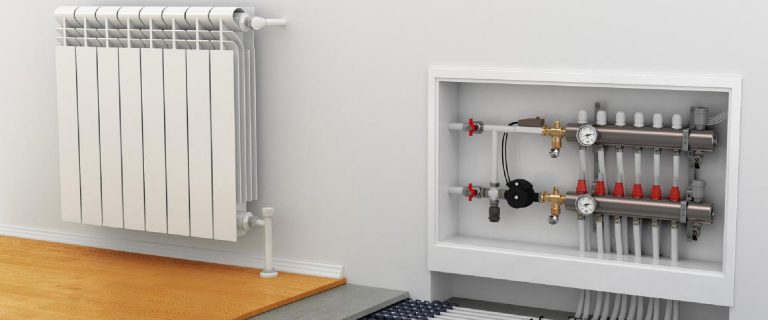 Place the radiators You need to allocate a lot of money for the introduction of heating, but the profitability is multiple. Electricity consumption is saved, because the hot technical water that drives the boiler can be used both in the bathroom and in the kitchen. However, masters do not recommend removing existing electric water heaters. There are also savings on water and sewage bills. The time required if the house was heated with solid fuel is saved – there is no preparation of firewood, no daily waste cleaning, and the house is warm. If you decide not to heat all the rooms in the house, the solution is very simple: close the valve on the radiators in the room that remains cold, and that”s additional savings. Or simply place radiators in those rooms where it is necessary – you can heat other rooms with other energy sources.
Which type of radiator is the best?
Choosing the right type of radiator is sometimes very difficult. Nowadays, a radiator should not only fulfill the most important criterion, to provide a sufficient amount of heat for space heating, but it must fit into the modern environment in which it is installed, as well as be multifunctional and of course be financially accessible. If you have decided to install radiators and have decided on a panel radiator, you will not go wrong because it is one of the most flexible options for most living spaces. Thanks to the flat design, the panel radiator finds a suitable place in every room and does not necessarily have to be installed in a niche under the window. It is recommended to mount your radiator under the window, but make sure it covers the entire width of the window. Despite their small dimensions, they have a high heat output. Panel radiators are also suitable for working with lower water temperatures in the distribution, so they can also be used in low-temperature heating systems. With low-temperature heating systems, it is important to increase the dimensions of the radiator.
Electric heaters for radiators
An electric heater is a device with thermoregulation that is used to heat water in radiators, either as basic heating or as auxiliary heating for radiators in a district or floor heating system. In the temperature maintenance mode, the heater works with reduced power, thus saving electricity, with maximum thermal efficiency. In the maintenance mode, the heater works only with the power required to maintain the temperature, ie it reduces the voltage and current that the heater takes from the network. In this way, current consumption is reduced. In this operating mode, the heater is not maximally loaded and its life span is extended.
Moving the radiator
Moving a radiator as part of central remote or central floor heating is an action that ensures that the existing radiator or several of them are moved to another position or to another room for various reasons. Moving the radiator in the case of district heating involves draining the water from the central heating system before working on any part of it. This is very important because it is practically impossible to empty just one radiator or disconnect the pipes from it without flooding. Draining the water from the system before the work on moving the radiator in the case of district heating is the responsibility of experts from the heating plant, so this fact must be taken into account. When moving radiators in buildings that have their own central heating, heating experts can perform all the necessary actions for replacing or moving radiators themselves. Moving the radiator should only be done when an adequate place has been found for it and a decision has been made where exactly it should be, although in some cases it is not recommended to move the radiator if it can lead to worse functioning of the heating.