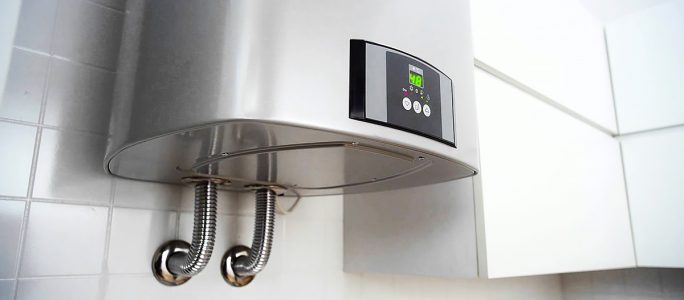
Installation of underfloor heating as a profitable investment
The installation of underfloor heating is increasingly seen as a cost-effective way of heating the living space. It is invisible and does not affect the appearance of the room in the same way that a radiator would. In addition, less maintenance and care is required to keep the system running properly and efficiently. Practical use is also an attractive option for homeowners. The main advantage of underfloor heating compared to radiator heating is that it requires a much lower water temperature (maximum 40 degrees) but also that it does not take up space, so the walls remain free. Also, the floor installation retains the temperature for a long time, which means that several hours can pass without turning on the boiler to reach room temperature.
What should you pay attention to when installing underfloor heating?
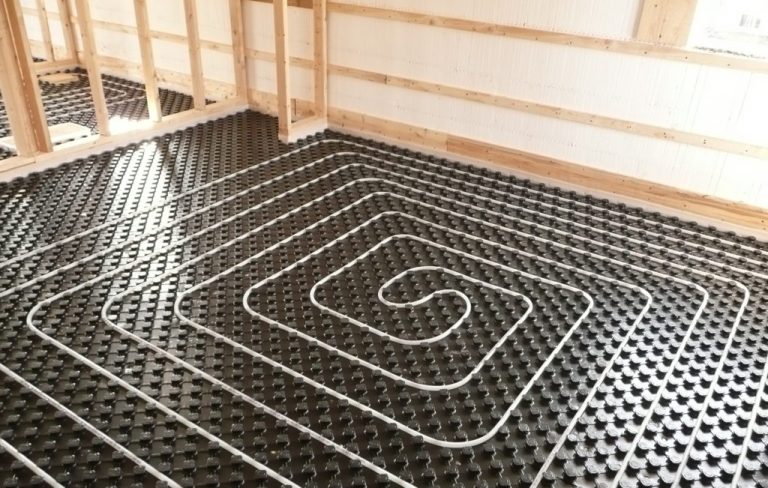 Installation of underfloor heating Underfloor heating can be installed under most floor coverings. However, the degree of efficiency is highest with floors made of natural materials such as stone floors or tiles. Underfloor heating should not be installed under a shower cabin or bathtub. Laying heating pipes requires exceptional expertise. That is why it is advisable to entrust the installation of underfloor heating to a professional who will ensure that everything is installed correctly and safely.
Advantages and disadvantages of underfloor heating
If you decide to install underfloor heating, keep in mind all the advantages and disadvantages of this system. Underfloor heating has several advantages: It is invisible and saves space because no radiators are installed. Furthermore, the heat from underneath is very pleasant – you always have warm feet without the room being too warm. Underfloor heating is more economical than standard radiators and is suitable for people with allergies, as dust does not collect as is the case with radiator fins. It can be connected to renewable energy sources such as a heat pump and is therefore environmentally friendly. Of course, it can also be easily connected to the existing heating system. Of course, there are certain drawbacks. Since floor heating works at lower temperatures (up to 40 degrees Celsius, while radiator heating works at temperatures up to 70 degrees), and because the floor heating pipes are hidden under the floor, it takes a longer time for the room to heat up. This can be a problem in the morning, so the best option is not to turn off the floor heating during the night, but to reduce the desired temperature in the rooms. That”s why underfloor heating is not a good choice for facilities that are heated occasionally, such as utility rooms, rooms in commercial buildings and the like.
What are the variants when installing underfloor heating?
There is a general difference between the two different underfloor heating systems: electric floor heating and hot water floor heating. When retrofitting floor heating in old buildings, the use of electric floor heating is preferred, as it results in a low installation height. It is also quite cheap to install. However, it is less environmentally friendly and the building must be well insulated for the heating to be effective. Hot water floor heating, on the other hand, is somewhat more expensive, but it is much more energy efficient and can be combined with different energy sources.
Why is it necessary to hire an expert for the installation of underfloor heating?
The method of calculating the required pipe length for installation of underfloor heating is based on determining the heat losses of the building. The whole calculation is similar to how it is done when installing a radiator. The recommendation would be not to use the odocative method. A central water heating system or electric heating can be used for heating. In order to avoid any confusion, the entire system must be designed by an expert and designed according to the situation on the ground. The installation can be done independently, but the calculation of the necessary material and the determination of the installation method should still be left to the experts.