
Is it necessary to hire a professional to replace the electric boiler?
Replacing an electric boiler is a complex task that requires a lot of expertise in electronics, mechanics, heating systems and more. Not only does the old boiler have to be removed, but a completely new installation has to be carried out, including water and electricity connections. If you want to replace an electric boiler with a solar boiler, you even have to make preparations on the roof. For these reasons, attempting to replace an electric boiler is not only inadvisable, but also dangerous. If you do something wrong, it can have fatal consequences for you and the people living in your home. This is why you should definitely hire an expert if you want to replace an electric boiler.
What are the advantages of an electric boiler?
When you want to replace an electric boiler with a new one, consider whether an electric boiler is still the best solution. Although it has its drawbacks, there are many reasons for this kind of boiler. The advantages of electric boilers are reliable heating, noiseless operation, no need for a separate room for installation, small size, low price, high operational safety, absence of chimneys, no harmful emissions (environmental protection) during operation. Boilers of smaller power up to 9kW can be single-phase or three-phase, while boilers of higher power are exclusively three-phase. In addition to the classic elements of an electric boiler, some boilers also contain: expansion tank, circulation pump, safety valve, filling/discharging tap, preostat, automatic venting pot, thermomanometer. The heater is switched on via noiseless contactors, so the boiler can be installed in the living space – there is no noise during operation. The boilers are also equipped with a three-stage regulating thermostat and have the option of selecting three engaged powers with switches, which provides the user with maximum comfort with minimal consumption. The boiler can be installed as an integral part of the installation of heating systems, floor heating, hybrid and accumulation systems.
Replacing the heater in an electric boiler
If you have problems with heating, it is possible that you do not need to replace the electric boiler, but only certain parts. Equipment malfunctions are possible, and the most common situation is when the heaters stop working. Replacing the heater can be a process that requires a lot of complicated efforts due to corrosion and physical deformation of the electric boiler and heater. Such endeavors when replacing the heater on site cause a mess. The cauldron of the boiler is full of impurities that settle in it over the years, this impurity comes from scale and heavy metals from the water, as well as corrosion of the system itself. In addition, there is also a problem where boilers are installed in newly built apartments in places where access to them is almost impossible. Taking into account all possible problems, it is best to turn to craftsmen who are experts in this work and have their own workshops where they will take your boiler and service it.
How to check the correctness of an electric boiler?
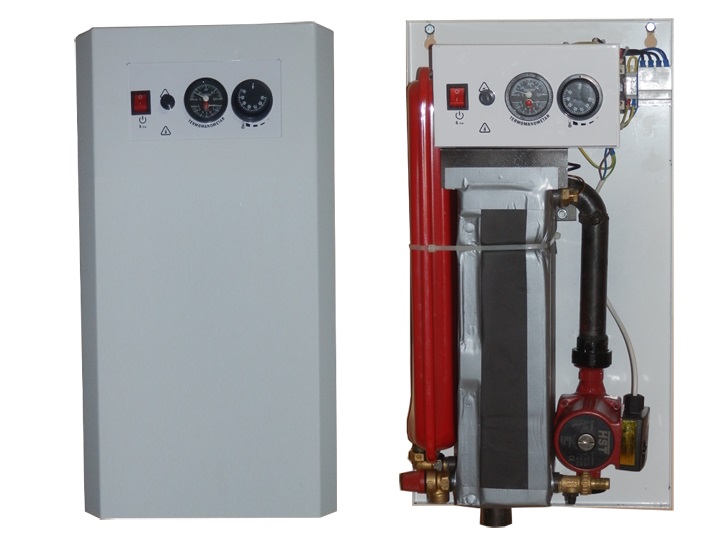 Replace the electric boiler It is mandatory to check the strength of the connections of the electrical installation. If the connection is loose, there will be increased heating of the contacts and conductors, which can lead to ignition of the installation (fire). In order to avoid burning out of the heater at the end of the service intervention or before the beginning of each heating season, it is necessary to ventilate the system (remove the air from the heating circuit). Then, fill the system with fluid (glycol or demi-water fluids are recommended) and check the pressure of the expansion tank. During the first few days of system operation, pay attention to the fluid pressure in the heating system. There is a risk of fluid loss, i.e. fluid overflow into the expansion vessel if it is not under adequate pressure, which will result in the heater burning out.
What alternatives are there to an electric boiler?
A heat pump boiler is an environmentally friendly alternative to an electric boiler, in which ambient air or waste heat is used to heat water. Water can also be efficiently heated using solar panels. Up to 70% of domestic hot water consumption can be covered by solar energy. However, a small electric boiler or similar is still needed here to cover the missing 30%. You can also combine a solar system with a heat pump and heating system to completely remove the electric boiler from the house. Of course, standard systems are also variants that can heat your space, such as a solid fuel boiler, a pellet boiler or a gas boiler.


