Should insulation for underfloor heating be entrusted to a master?
Underfloor heating is the most widespread heating system today. The advantages of underfloor heating over other central heating systems are well known. With underfloor heating, the air temperatures at different heights of the living space are closest to ideal, because it gives a feeling of satisfaction, although the average temperature in the space is lower compared to the space heated by radiators. You can distinguish the insulation for underfloor heating by the thickness of the panels, by the packaging and the need for the installation site. Which insulation is best for your underfloor heating, will be best known by a craftsman who already has experience in this type of work. Post the required service on Bellcom.rs and you will receive offers from local companies/artisans. It”s up to you to choose the best offer and thus save time and nerves while the work is done by a bunch of experts.
Which materials are the best for underfloor heating insulation?
The purpose of insulation for floor heating is to prevent the absorption and removal of produced thermal energy via the concrete substrate. Expanded styrofoam or extruded styrofoam of appropriate quality and pressure resistance, or stone wool, are excellent for thermal insulation in underfloor heating systems. In order to reach the currently valid values, a minimum thermal insulation layer of 5 cm is required, but a thermal insulation thickness of 10 to 15 cm is suggested. Raster panel for underfloor heating is a system thermal insulation panel with spacers in a regular grid, made of EPS, i.e. styrofoam. The spacers enable fixing the heating pipes of the underfloor heating system, diameter from 16mm to 22mm. Using this panel, the underfloor heating system is installed quickly and easily.
Insulation panels as insulation for underfloor heating
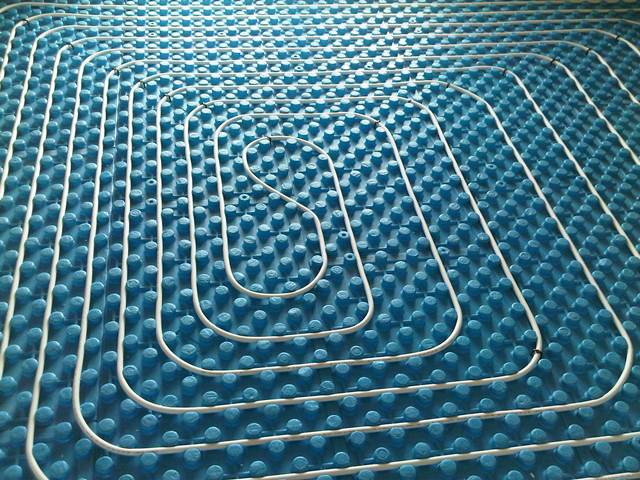 Insulation for underfloor heating Insulation panels are of great importance in the insulation for underfloor heating as a component that prevents heat dispersion in the surface heating system, facilitates the installation of pipes, and enables rapid heating of the room. By using the panels, a comfortable temperature of the floor surface (about 24-26 C) is obtained with a suitable air temperature in the room, which eliminates discomfort caused by higher floor temperatures as well as possible problems in the construction structure of the floor. Using the insulation panel reduces the total amount of pipes, the number of distribution circuits, pipe diameters, pump power and boiler power, that is, immediate energy savings are achieved. The panel is formed from a profiled styrofoam plate covered with a layer of polystyrene with a thickness of 0.6 mm. The profiled relief of the panel allows the installation of pipes with a diameter of 15-18 mm.
Thermal insulation for reduced energy consumption
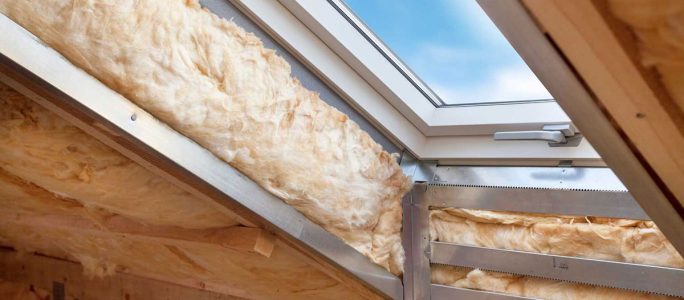
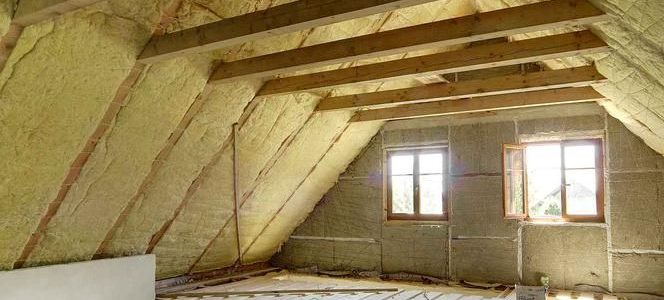
Energy consumption for heating and cooling can be significantly reduced by full thermal insulation of the peripheral construction parts of buildings (walls, floors, roofs), and that in old dilapidated houses up to 6 times. The most preferred material for insulation is stone wool, followed by Styrofoam. In addition to the fact that thermal insulation significantly contributes to saving the energy required for heating, it also protects the building element from overheating, prevents the condensation of water vapor (which leads to the rotting of the building material and the creation of microorganisms, fungi and mold) and contributes to the thermal comfort in the room (because they are Thermal insulation enables the accumulation of heat in the walls of the rooms, i.e. their heating, thus reducing the temperature difference between the internal surfaces and the air in the rooms.
Why is floor insulation important?
The most expedient method to prevent the cold from below from leaking through the foundation and penetrating the house is to install high-pressure resistant thermal insulation directly under the foundation slab. Using this method, the thermal insulation effect is so good that even low ground temperatures, significantly lower than 10 °C, are not felt at all from the inside of the floor slab. A protective dam against the cold should ideally consist of thermal insulation boards simultaneously resistant to high pressure loads – strength class 50 or 70. These thermal insulation boards are therefore so strong that the entire building can be placed on them.