The importance of silicone sealing
Silicone is a very common means of preventing the flow of water in certain areas. Silicone is mainly used in households and in construction and is easy to use. Over time, the silicone joints between the tiles can begin to break down and loosen. Silicone grouts must be repaired so that the effect of the silicone continues to function. Failure to do so may be harmful to your health. That”s why there are important factors for silicone sealing. If you are not sure about the independent repair of silicone joints, entrust this work to a proven master.
What should you pay attention to when repairing silicone joints?
If you encounter damaged joints, they will need to be repaired. It makes sense to inspect the rest of the bathroom or kitchen to see if the silicone is breaking down elsewhere. Also check if there is mold in these places. When repairing mold-infested silicone grout, the grout must be treated with a special mold remover. This then protects the joints from further mold growth and can prevent mold from regenerating and spreading. Sealing with silicone is very important in rooms such as the bathroom or kitchen.
Caulking the bathtub with silicone
Anyone who has a bathtub in their bathroom knows that the composition of the bathtub and the tiles on the wall must be watertight. It is also known that in theory it is simple but in practice it is not so perfect. For sealing with silicone, you only need a few small things, such as: masking tape, silicone, silicone gun. Although almost all silicones say that they are resistant to mold, it will appear at some point. For this reason, you will need to periodically change the silicone between the tub and the tiles. To begin with, cut the existing silicone on which the mold was caught with a knife or scalpel in a suitable place. After removing the old silicone, check if there is mold in the opening between the tiles and the tub. If so, soak a cloth with Varicin and use it to remove the mold. As far as aesthetics are concerned, stick painter”s tape on the tiles about 5 mm above the bathtub and on the bathtub, at a distance of about 5 mm from the tiles, so that the applied silicone is completely symmetrical, and its edges are straight. Silicone is applied with a silicone gun. Considering that you have protected the wall and the bathtub with strips, feel free to apply enough silicone to cover all openings. Shape the edge with your finger and remove the excess silicone. If you want the surface of the silicone to be extremely smooth, wet your finger with water before and occasionally during the molding of the silicone. Do not press too hard so as not to remove too much silicone. Immediately remove the tapes from the tiles and the tub after molding the silicone.
Why is silicone sealing useful?
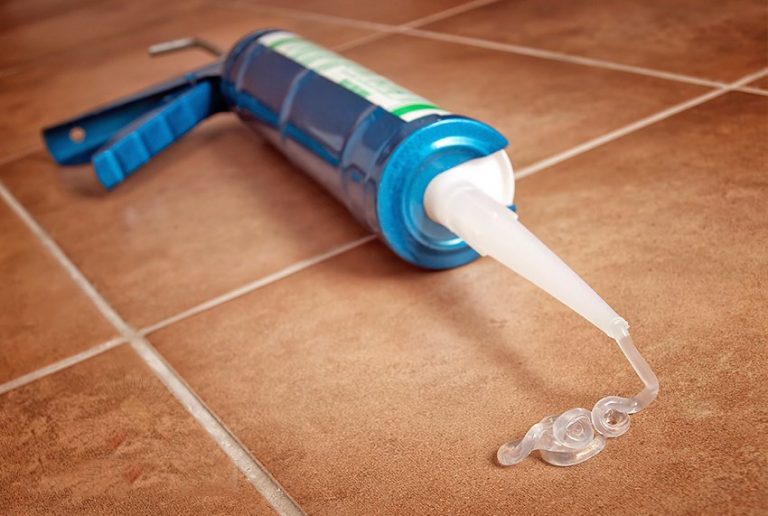 Sealing with silicone Silicones remain stable at both low and high temperatures. Moreover, they are almost neutral to chemicals, have excellent resistance to moisture and weather conditions. If these properties are extended to very high adhesion to all materials, especially for smooth surfaces, then we will have an excellent glue and silicone in one. The surface of the hardened joint is shiny, smooth, dust-resistant and easy to clean. Silicones are widely used in household and automotive repairs. They are intended for various types of repairs: gluing and filling, ie. silicone sealing of everyday objects made of glass, ceramics, metal and plastic. They are necessary as materials used for siliconizing construction machines and equipment, such as engines and components, then in construction – especially for interior decoration. They replace window putty very effectively, and are also used to fill external and internal house joinery.
Classification of sealants
These materials aim to bridge the gap between the two components of an object; they are made to adhere to the substrate on both sides of the cleft. They have less strength than adhesives but greater elongation or elasticity. Their primary function is to seal, to keep water and air out or in. Their function is three-dimensional; they are very often exposed to the weather. Sealants are classified as one-component, two-component, or tape sealant. They are also categorized by chemistry: acrylic, butyl, latex, polysulphides, polyurethane and silicone. As with adhesives, the performance properties and environmental profile of a sealant is often related to its chemical composition.