The importance of attic insulation
Most houses have a useful attic under a pitched roof, so roof insulation is key to comfortable living in that space. Proper insulation of the attic brings multiple comforts, which are related to warmth, good acoustics and savings on heating bills. In the winter, up to 30% of the heat leaves the house through the uninsulated roof, and in the summer, the tile heats up a lot, so it is extremely hot in the attic. For these reasons, good insulation of the attic is necessary in order to prepare this space as well as the rest of the house for normal life in it.
Vapor barrier as part of attic insulation
One of the last steps during attic insulation is the proper installation of a layer that will prevent the entry of water vapor from the heated space into the insulation, which is a vapor barrier. The vapor barrier is placed in front of the insulation layer and should be placed over the entire surface of the inner side of the roof. Precise foil placement is also important. The vapor barrier is attached by stapling to the roof structure or glued with double-sided adhesive tape to the steel substructure. At the joints of the vapor barrier, it is necessary to make an overlap of at least 10 cm and stick it with tape.
Attic insulation in accordance with energy efficiency standards
In order to fulfill the regulations and build in accordance with energy efficiency standards, it is necessary for all buildings to be thermally insulated. Thermal insulation reduces heat loss during winter and prevents overheating in summer. Also, such an object has a longer lifespan and better withstands temperature fluctuations. The direct consequence is less use of electricity for heating and cooling, and therefore lower electricity bills. Insulation of the attic is very important in this sense, because a good part of the energy is lost through this part of the living space if it is not carried out according to the regulations or is not there at all.
Which material to choose for attic insulation?
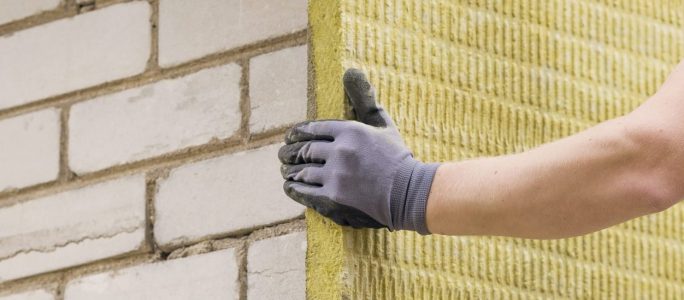
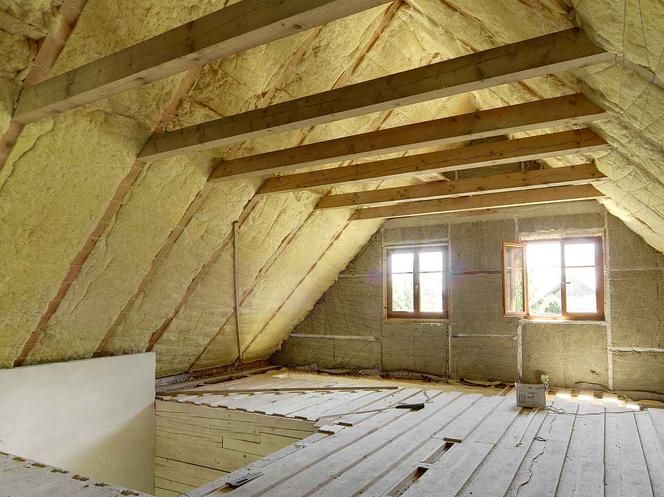 Attic insulation There are many different thermal insulation materials available on the market, and the effects of application depend on the choice, thickness of the layer and proper installation in the construction. When choosing them, you should keep in mind features such as fire resistance, degree of resistance to moisture, hardness and durability. Depending on the origin of the raw material, thermal insulation materials are divided into mineral (stone and glass wool) and organic (polymers and natural materials). The choice is up to you which material to use, but if you are not sure, it is best to turn to craftsmen who already have experience in this work.
Why is attic insulation necessary?
The roof can be a big waster of energy because due to its insufficient insulation, up to 30 percent of the heat from the interior of the room can be lost. Although the insulation of the attic can be carried out from the outside, it is best if it is between and under the roof beams. The advantage of mineral wool in the attic, in addition to temperature balance and noise protection, is its vapor-permeable character, which implies the unimpeded exit of water vapor from the interior space, without condensation. The degree of hermeticity that is obtained is also significant – air leakage is reduced, thus the loss of energy. The whole package includes stone and glass mineral wool, vapor-permeable and waterproof foil, active vapor barrier and adhesive tapes.
Is unused attic insulation required?
When talking about the insulation of the attic space, the topic is usually the adaptation of this part of the house and its arrangement to be a living space. However, it is often the case that there is no need to move into the attic space, or that the roof slope is too low and unsuitable for adaptation. In most cases, it is only necessary to install insulation in order to make the rooms under the attic warmer and to consume less energy, both during the winter and summer months. When insulating an attic that will not be in use, the insulation is installed to protect the space below the attic space, not the attic itself. That is why the insulation is not placed on the roof structure, but on the floor of the attic. It makes the job much easier. A vapor barrier, i.e. a vapor-permeable foil, should first be placed on the floor in the attic space. Insulation material is placed over the foil. In principle, the rule applies to insulation – the more the better. Of course, any thickness of insulation is much better than none. For the best insulation effect, the advice is a layer of stone or glass wool not less than 12 centimeters. A thicker layer of insulation will reduce heating costs, but you will especially feel the real effect during the summer months, because it will be obvious that the air conditioner is turned on much later on the first hot days.