Why hire a professional for exterior basement insulation?
One of the most common causes of dampness in basement rooms is defective or even completely missing exterior insulation of the basement. The result is cold and uncomfortable basements, and in many cases the formation of mold. If you want your basement to be professionally insulated, it is best to leave this task to an expert, because the external insulation of the basement is associated with many technical obstacles, requires a lot of master”s knowledge, as well as earthworks. The subsoil must be prepared, and if the outer walls of the basement cannot be reached otherwise, the soil must be excavated. Basement walls are part of the basic structure of your home. Errors in construction work can negatively affect the statics of the building and have fatal consequences. Therefore, if you are not completely sure that you can do the job properly yourself, leave the exterior insulation of your basement to the professionals.
Why is external insulation of the basement necessary?
Structural waterproofing is a general term for techniques that allow buildings to be built below ground level and prevent the penetration of soil moisture through walls and floors, also known simply as external basement insulation. It can be divided into several areas of application, depending on the load to which the building is exposed and the needs that must be met. Rainwater seeps into the soil and the groundwater level rises. To protect the building from moisture damage, various measures are necessary depending on the load conditions: waterproofing against soil moisture, leachate or pressure water. All parts of the building that are in contact with soil and water must be protected. In particular, this includes the foundation slab, walls, floors, foundation and planned site elevation as well as structural details such as penetration and movement joints. In rare cases, for example, due to dampness in the walls or water splashing inside the basement, the wall/foundation interface must first be waterproofed to prevent moisture penetration from the rear, before applying bituminous products. The exposed part of the foundation and the wall itself (approximately up to a height of about 50 cm) must be waterproofed with a layer of quality material. To prevent water ingress from the inside, the boundary surface of the inner wall/foundation can be protected with a layer of waterproof material. As a protection against splashing water in the transition zone between the ground level and the basement part of the wall, a waterproof layer should be applied. The coating should cover about 50 cm above the planned ground level and about 30 cm below. After that, the finishing of the foundation can be plaster or bricks.
Benefits of external basement insulation
In addition to avoiding moisture and mold by better insulating the exterior of the basement, professional insulation has other benefits. Energy and heat are no longer lost and a pleasant atmosphere is created in the basement. You also save on heating costs. Space for entertainment and hobbies has long been an integral part of many houses, but with appropriate insulation, living rooms as well as bedrooms can be created in the basement if desired.
Is external insulation of the basement necessary?
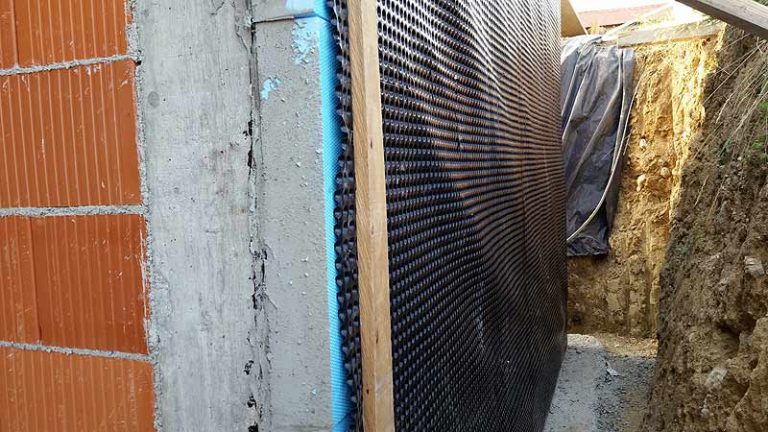 External insulation of the basement The basement does not always have to be insulated from the outside. In some cases, internal insulation may also be sufficient. Internal insulation is cheaper, but not always as effective and thorough as external basement insulation. If you want to turn your basement into a living space, you usually can”t avoid external insulation. Anyone who is unsure of the right option for their problems should seek professional advice. Register for free at Bellcom.rs, post the required service and you will receive non-binding offers. It is up to you to make the final decision to whom you entrust the work.
The importance of basement waterproofing
Already with the first rains, all the leaks that occur in the waterproofing of the basement come to light, such as dampness or even water leakage through the walls or floor. If you also have this problem, contact Bellcom.rs users who will solve your problem. All buried objects must have insulation. If there is no waterproofing on the outside, or it has loosened, we can only do it from the inside. There are several ways of doing it. We perform it with bitumen strips, with the fact that we build a wall over it on a brick bed, or we plaster it over a rabic mesh. This is how we prevent the insulation from separating from the substrate (wall) over time. Another way is by applying a penetrant, which does not need any support in the form of a wall afterwards, because it is a material that penetrates and unites with the substrate. By using this material, we get a much higher resistance to water penetration, as well as the fact that it can be worked on a wet surface (which the material also requires).