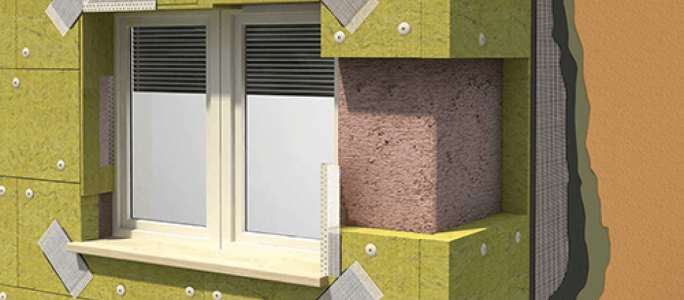
Is styrofoam or stone wool better for insulation?
When installing a contact facade on a house, there are two basic options – Styrofoam or stone wool. Both solutions have their advantages and disadvantages. The cost of materials and the cost of installation per square meter are also important items. Namely, the insulation of the house is generally installed once and should last for decades, so it is very important to make a good decision. Consultation with experts in this field will help you choose the material that best suits your object and purpose.
Advantages of styrofoam
Styrofoam has a weak absorption power. Short contact with moisture and water does not lead to loss of thermal insulation properties. Temporary condensation of water vapor that can occur within the Styrofoam structure can have serious consequences. Although this is an artificial material obtained from petroleum processing, it does not contain substances that are harmful to health. Styrofoam is very light and has good mechanical properties. However, its sound insulation is not particularly high and its vapor permeability coefficient is also low. Since it is self-extinguishing, the material cannot cause fire to spread. Styrofoam boards cut from blocks, which are used mainly seasonally, remain flat and do not change their dimensions. The use of plates no larger than 120 x 60 cm is allowed, their color is mostly white, white with dark parts or graphite color.
Benefits of stone wool
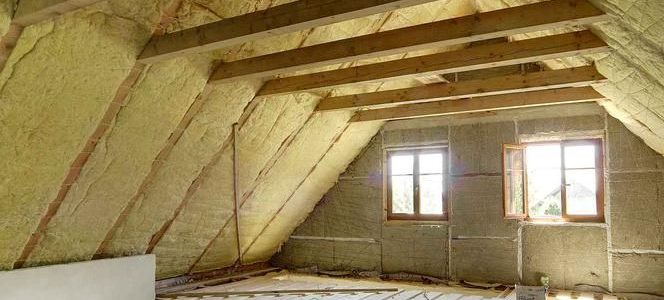
Rock wool is resistant to high temperatures. Made of natural stone, it begins to melt only after two hours of exposure to temperatures higher than 1000 °C. The heat resistance of the added binders is slightly lower. Stone wool is classified as a non-combustible material. But it also has a high resistance to most chemical substances. Its coefficient of vapor permeability is very high, which ensures the free passage of water vapor. This type of agent limits the possibility of drawing water by capillary action, as well as the absorption of water vapor from the air. Stone wool boards are very heavy and stiff, and have relatively low durability. However, thanks to its fibrous structure, stone wool can have good acoustic insulators for walls, and it also meets the requirements of the standard.
What should you pay attention to when choosing insulation material?
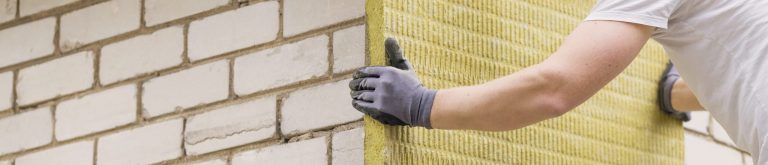 Styrofoam or rock wool If you have understood how important thermal insulation is for your home, then the next step is to search for expert craftsmen and purchase materials. You should definitely talk about thermal insulation with someone who installed it. Personal experience can help you a lot in deciding which team of masters to choose. However, when it comes to choosing the material, you will surely come across conflicting information. You will often hear two completely different opinions about the same material from two people. That”s why we advise you to read about the characteristics of the materials themselves on the manufacturer”s websites, and then you can consult with an expert. One of the most common dilemmas is which type of material to choose: styrofoam or stone wool for the facade? These two materials differ a lot in terms of characteristics, but also in price. So it would be best to decide what type of material you want and then ask about different manufacturers.
Facade insulation with styrofoam or stone wool?
Facade insulation can be done in two ways, the first is when the house is being built and the insulating material is installed directly in the wall. Another method is applied when insulation is placed on older buildings that were built in a previous period, which is called contact facade or demit facade. In our country, the contact facade is most often made of 5 cm thick Styrofoam, although companies dealing with insulation work recommend a thickness of 12 cm for our climate. In addition to regular styrofoam for insulating facades, recently you can often come across styrofoam mixed with graphite threshold. Stone wool for facade insulation is recommended primarily because it is vapor-permeable and allows excess moisture to drain from the walls. In addition, some average thermal insulation is 10% better than Styrofoam and it is considered a non-combustible material. However, it has a higher cost per square meter than Styrofoam, so it is used less often. Styrofoam or stone wool, the choice is yours.