Advantages of hiring professionals for ceiling insulation
If you have the feeling that you are not using energy efficiently, and you don”t know why, then insulating the ceiling in your house can help you. The question is often asked which material and which method should be used to insulate the ceiling. If you are not sure how, we recommend that you contact the experts. Based on his experience, he can choose the right materials for ceiling insulation and allow you to heat again in an energy-efficient way.
What should be considered when installing ceiling insulation?
The ceiling can be insulated with different materials. The so-called insulating boards are used, which can consist of different materials. Sometimes even Styrofoam is used. Which type of insulation is most suitable for your house or your ceiling, it is best to ask in specialized stores or hire an expert who can look at the entire situation on site and make a good assessment. Also make sure the insulation material is at least 12 centimeters thick. This is the only way to ensure good insulation of the ceiling.
Ceiling insulation installation procedure
 Ceiling insulation During installation, Styrofoam must be protected from external influences, primarily UV radiation, i.e. light. Therefore, a vapor-permeable foil is placed over the Styrofoam if the final layer is not to be placed, or a screed (classic cement, wooden, plasterboard) is made over the Styrofoam and, if necessary, a final floor covering over it. Styrodur is not used if there is no air humidity regulation in the room, i.e. ventilation system, and for the reason that it is very poorly permeable to steam (from below, from a warmer room). Styrofoam (wool) does not stick when placed on the floor. Styrofoam board compositions must not be filled, they are placed next to each other with a joint, and air sealing is achieved with an upper covering (screed, foil) in a convenient way. For the purpose of insulating the unheated attic space, the recommended thickness of Sitropor (or other similar insulation) is 25 cm (20 cm is the permitted minimum) for standard (average) buildings up to 40 cm for low-energy buildings according to the climate zone. During the process of installing the ceiling insulation, special attention should be paid to the joints with the walls, that they are sealed against air flow. Styrofoam must not be left unbuilt, i.e. unprotected.
What are the advantages of ceiling insulation?
In winter, the warm air – which is created by heating – rises and seeks a way to the outside. If your ceilings are not insulated enough, this air will also find its way outside. In this way, more heating is automatically required because it is simply not warm in the room, because the air is constantly escaping. In summer, there is a problem that hot air from outside can penetrate inside. Insulating the ceiling is necessary to prevent all this, so that you don”t have to heat as much in winter and cool with air conditioners in summer. On the one hand, you save costs, and on the other hand, you protect the environment because you use less energy.
What preparations should you make before insulating the ceiling?
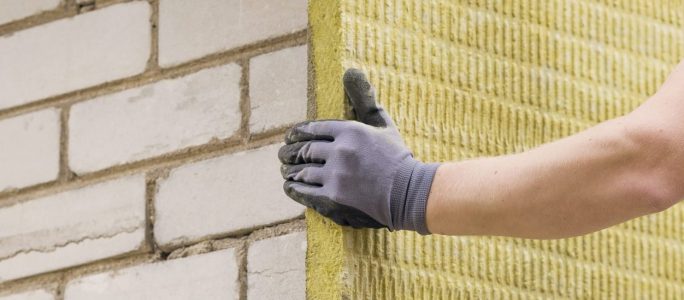
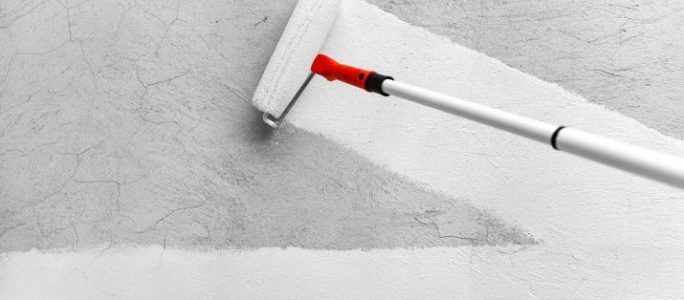
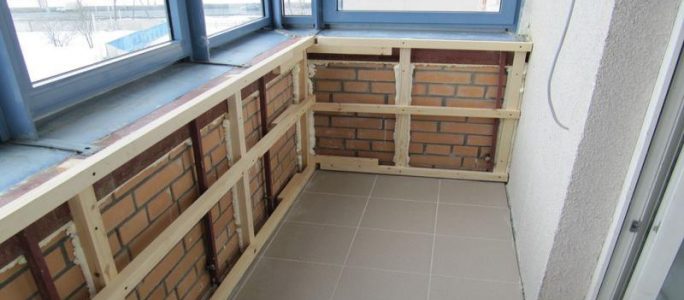
First of all, the ceiling should be thoroughly cleaned. This is the only way to ensure good insulation of the ceiling later. You also need to level or repair unevenness and cracks in the ceiling. The best way to do this is to work with plaster or plaster and close the ceiling. This is followed by the construction of the basic frame in order to provide insulation in general. This substructure may look like you are dragging wood slats from one wall to the other and attaching them to these two ends. Repeat this process several times so that you have assembled several strips of wooden slats. Measure the gaps and cut the insulation material according to those measurements, and the insulation panels can be clamped between the wooden slats without any major problems.
Insulation of the structure towards the unheated attic
A lot of heat is lost during the winter through the attic through an uninsulated roof. Warm air rises upwards, so the measures of installing thermal insulation on the highest parts towards the unheated space have the greatest effect. Measures for installing additional thermal insulation are very simple. In most cases, the living spaces have such a relative humidity that a vapor barrier is placed under the insulation, so that the moisture escaping through the structure does not lead to excessive condensation in it. Such ceilings usually separate living spaces from unheated attic spaces, and therefore this is a very important construction in terms of energy savings. Mezzanine structures to the unheated attic are very easy to insulate, so the investment is quickly returned from savings in energy consumption.