What is the advantage of hiring a professional for basement insulation?
Basement rooms must be effectively protected from moisture and water in order to be usable, so insulating the basement is not just a matter of prestige but really a necessity. When it comes to simple moisture or water without hydrostatic pressure (eg rainwater penetration), then the waterproofing layer we apply should be: Effective against moisture and water; It is difficult to do all this in the Hire a professional, and he will know exactly what your facility needs. Whenever possible, it is recommended to apply a waterproofing layer on the outside of the basement wall, since water penetration is possible from that side. Coating the outside of the basement walls and the floor from the inside (only possible) with a cement coating creates a waterproofing layer that is: Completely waterproof; Vapor permeable and enables ventilation and unhindered use of basement rooms; Reliable and long-lasting, thanks to the inorganic nature of the material. If coating from the outside is not feasible, an adequate material can alternatively be applied from the inside, as it bonds strongly to the substrate and resists negative pressure. During the construction of a new building, when pouring concrete supporting elements, it is recommended to add waterproofing additives.
Why is basement insulation needed?
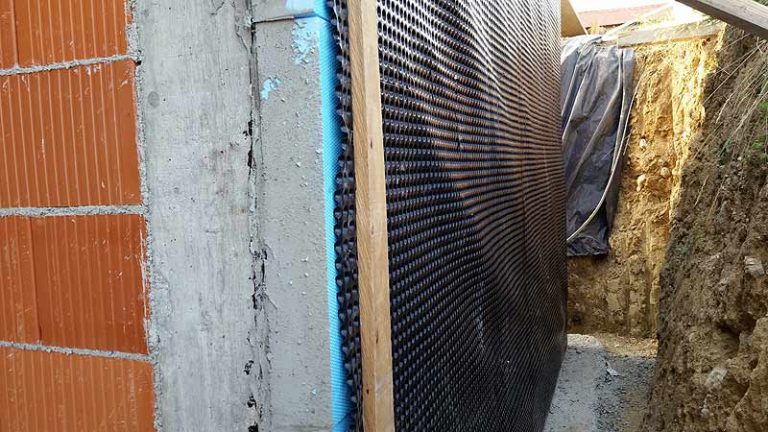
Structural waterproofing is a general term for techniques that allow buildings to be built below ground level and prevent the penetration of soil moisture through walls and floors, also known simply as basement insulation. It can be divided into several areas of application, depending on the load to which the building is exposed and the needs that must be met. Rainwater seeps into the soil and the groundwater level rises. To protect the building from moisture damage, various measures are necessary depending on the load conditions: waterproofing against soil moisture, leachate or pressure water. All parts of the building that are in contact with soil and water must be protected. In particular, this includes the foundation slab, walls, floors, foundation and planned site elevation as well as structural details such as penetration and movement joints. In rare cases, for example, due to dampness in the walls or water splashing inside the basement, the wall/foundation interface must first be waterproofed to prevent moisture penetration from the rear, before applying bituminous products. The exposed part of the foundation and the wall itself (approximately up to a height of about 50 cm) must be waterproofed with a layer of quality material. To prevent water ingress from the inside, the boundary surface of the inner wall/foundation can be protected with a layer of waterproof material. As a protection against splashing water in the transition zone between the ground level and the basement part of the wall, a waterproof layer should be applied. The coating should cover about 50 cm above the planned ground level and about 30 cm below. After that, the finishing of the foundation can be plaster or bricks.
Benefits of basement insulation
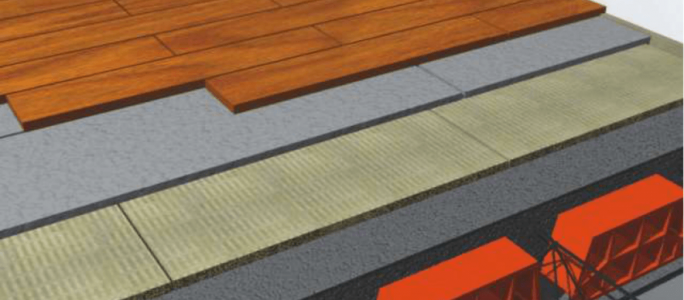
 Basement insulation A poorly insulated basement has many disadvantages: The floor on the ground floor is cold and valuable heat escapes through it. Condensation forms on the cold walls in the basement, which leads to moisture and mold. If you insulate your basement professionally, it not only has positive effects on the basement: your apartment will also be noticeably warmer.
Water load during basement insulation
Soil moisture is water bound in the capillary system of the soil; it can rise by capillary action even against the force of gravity. Soil moisture is always present as a minimum water load. Another type of water load that can be compared to soil moisture is unaccumulated leachate that occurs as a result of precipitation. This type of loading can only be realistically expected if both the construction site (at a sufficient depth below the foundation) and the excavation backfill material consist of highly permeable soil types, for example sand or gravel. This type of water loading requires soil that is porous enough to allow water to drain freely in liquid or droplet form from the soil surface to the free groundwater level, without water accumulation even after heavy rains. If the soil is not sufficiently permeable, it must be equipped with an adequate drainage system that has sufficient drainage capacity to avoid water accumulation.
Internal basement waterproofing
Basement walls can be permanently waterproofed from the inside without stripping, i.e. without any earthworks. In this way, waterproofing can also be carried out with active water penetration. Water tightness under pressure is achieved with special waterproofing systems. After the successful waterproofing, a remedial plaster is applied which is open for diffusion.
Cutting basement moisture
Already with the first rains, all the leaks that occur in the waterproofing of the basement come to light, such as dampness or even water leakage through the walls or floor. If you also have this problem, contact Bellcom.rs users who will solve your problem. All buried objects must have insulation. If there is no waterproofing on the outside, or it has loosened, we can only do it from the inside. There are several ways of doing it. We perform it with bitumen strips, with the fact that we build a wall over it on a brick bed, or we plaster it over a rabic mesh. This is how we prevent the insulation from separating from the substrate (wall) over time. Another way is by applying a penetrant, which does not need any support in the form of a wall afterwards, because it is a material that penetrates and unites with the substrate. By using this material, we get a much higher resistance to water penetration, as well as the fact that it can be worked on a wet surface (which the material also requires).