Sound insulation solutions
It is often the case that the sound of a loud television, music, conversation, the noise of water pipes, etc., can be heard from the neighboring apartment, which is separated from your apartment by a partition wall. In those cases, it is possible to create a large number of different sound insulation systems that will effectively eliminate this phenomenon. However, such solutions are usually thicker and include, among other things, metal construction, stone wool and plasterboard, which all together take up about 8 to 10 cm of space. Of course, there are also simpler solutions that require less thickness and take up to 60 mm of space.
In what ways is sound insulation installed?
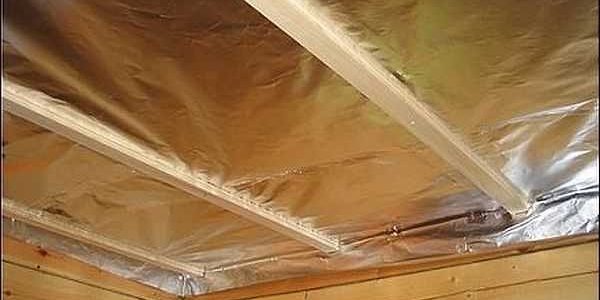
The problem of noise in TV and/or music studios, gyms, and industry can easily be solved today with the help of modern materials. The construction industry has enabled us to prevent the transmission of sound from one room to another. In the construction industry, we call it sound insulation, and we can roughly divide it like this: isolation from impact noise and isolation from spatial noise. The mass principle implies the following: the shaking of any obstacle caused by sound disturbance will be more difficult when it is heavier, i.e. has a greater mass. Simply put, a heavier wall is harder to make vibrate. However, for this principle to be useful, it is very difficult to perform it even in theoretical conditions since it is necessary to significantly increase the mass of the obstacle in order to have a visible effect in sound insulation. Thus, this principle could be useful where the noise problem is associated with obstacles that have a small mass. The separation principle is not universal and depends on the frequency. With this principle, sound insulation implies the creation of an air pocket between two layers of the barrier. By creating as little physical connection as possible between the two layers, noise isolation will have a better effect. In situations where elastic materials (mineral wool, Styrofoam, etc.) are inserted between the obstacles, i.e. absorbers, a double partition is formed between the obstacles. This results in attenuation of the sound as it first passes through the air pocket, and then additional sound reduction occurs when the sound encounters the added insulation ie. absorbers.
What are the best materials for soundproofing?
One of the most widespread materials in the world, which can be successfully used in most sound insulation projects, is insulating foam. In addition to our belief that foam can provide the best results when insulating walls, ceilings or floors, we prefer to use foam for the following reasons: the installation of the insulating foam is quick and easy (mechanical fixing or gluing), the insulating foam for sound insulation can be very easily removed or changed, the insulating foam fits into the most limited sound insulation budgets, the foam on our market already has commercial uses that are unlimited,
Is stone wool good for sound insulation?
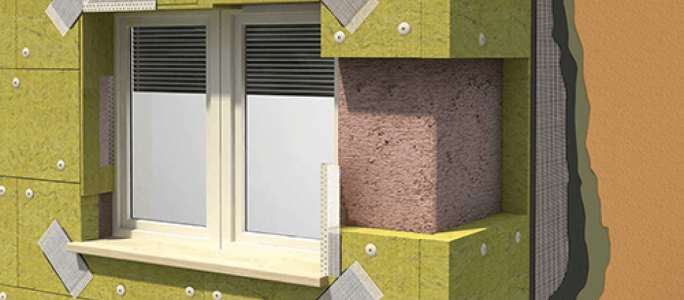
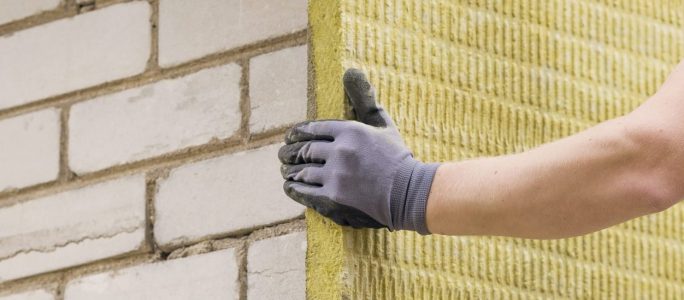
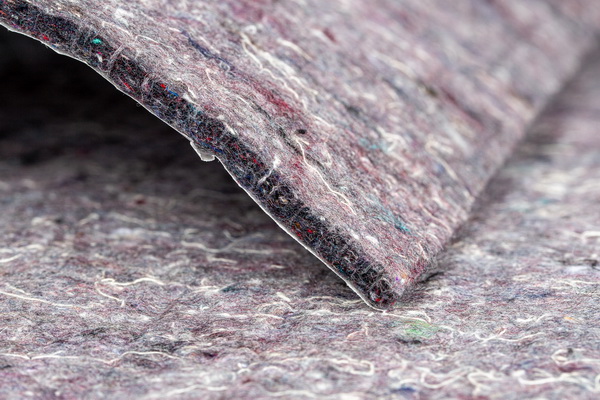 Sound isolation Rock wool prevents the spread of noise. Thanks to its open fiber structure, it absorbs sound and thus provides optimal sound protection between rooms. Well-insulated walls can reduce noise by more than 50 dB. By comparison, a wall without insulation reduces noise by only 30 dB. This makes a big difference since the human ear perceives a difference of 10 db as twice as loud. Stone wool absorbs noise very effectively and thus increases the comfort and quality of life, both at home and at work. By installing stone wool on partition walls, noise propagation is prevented. Thanks to the interlaced fiber structure, stone wool absorbs sound and thus provides optimal sound protection between rooms. Better sound insulation not only ensures a quieter life for those who have noisy neighbors, but also allows us to express ourselves more freely, for example, in a musical sense, or some other joyful, but also noisy activities.
How can I install sound insulation myself?
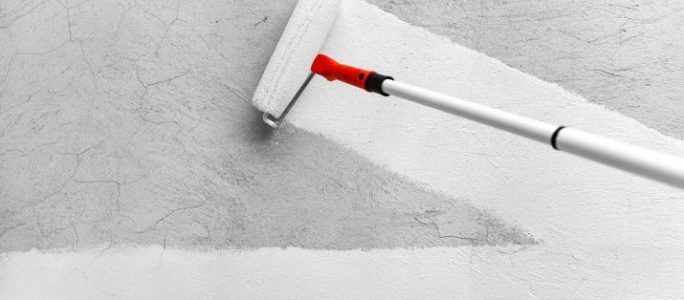
It would be best to hire a professional to install sound insulation, but if you still want to do it yourself, here are the instructions: 1. Determine the final thickness of the wall, and mark on the floor where you want to place the “U” supports, taking care to leave a 1 cm distance between the wall and the metal structure that you will install later. Using a plumb line, make equal marks on the ceiling. It is very important that the markings on the floor and ceiling match perfectly, so that the metal structure and the entire wall are vertical. 2. Place the double-sided tape on the floor, ceiling, and side walls. Place “U” brackets on that floor and ceiling strip using a plumb line to determine the perfect fit. Fix the supports mechanically using screws and a drill. When attaching, pay attention to the drilling location so as not to damage existing installations. 3. Place the profiles on the adhesive tape on the side walls. Screw in the metal frame using screws and a drill. 4. Measure the width of the stone wool insulation board. That width will be the measure for the distance of the vertical elements of the metal structure (for example: every 60 cm). 5. Place the metal “C” profiles at accurately measured distances making sure they are completely vertical to the floor and ceiling profiles. Fasten the profiles with screws. 6. Place stone wool panels in the space between the vertical guides. Using minimal force, insert the stone wool slab into the opening of the “U” bracket. The panels are installed from the bottom up. In the remaining space up to the ceiling, insert the panel that you have cut to the correct size. 7. Fasten the plasterboard to the metal structure using screws and a screwdriver. 8. Cover the plasterboard joints with tape. Cross those joints with a special mass in the width of two strips. After drying, you can paint the walls using a roller.